Roof ventilation in Kitsap County can shape comfort, costs, and roof life. Your roof often works quietly, yet it matters daily. Because Kitsap County has steady rain and mild swings, airflow choices can help a lot.
As a result, better circulation can reduce moisture, limit heat buildup, and protect materials. Therefore, you do more than preserve property. You also improve how your home feels and performs.
Importance of Roof Ventilation in Kitsap County
Roof ventilation in Kitsap County helps homes handle damp winters and humid summers. Frequent rain can trap attic moisture. Then mold and wood rot can follow if air cannot escape. Also, balanced airflow can extend shingle and underlayment life.
In addition, Roof ventilation Kitsap County homeowners choose can lower cooling strain. Hot attic air can push heat into rooms. Therefore, steady intake and exhaust keep temperatures more even and improve comfort.
Understanding the Basics: How Roof Ventilation Works
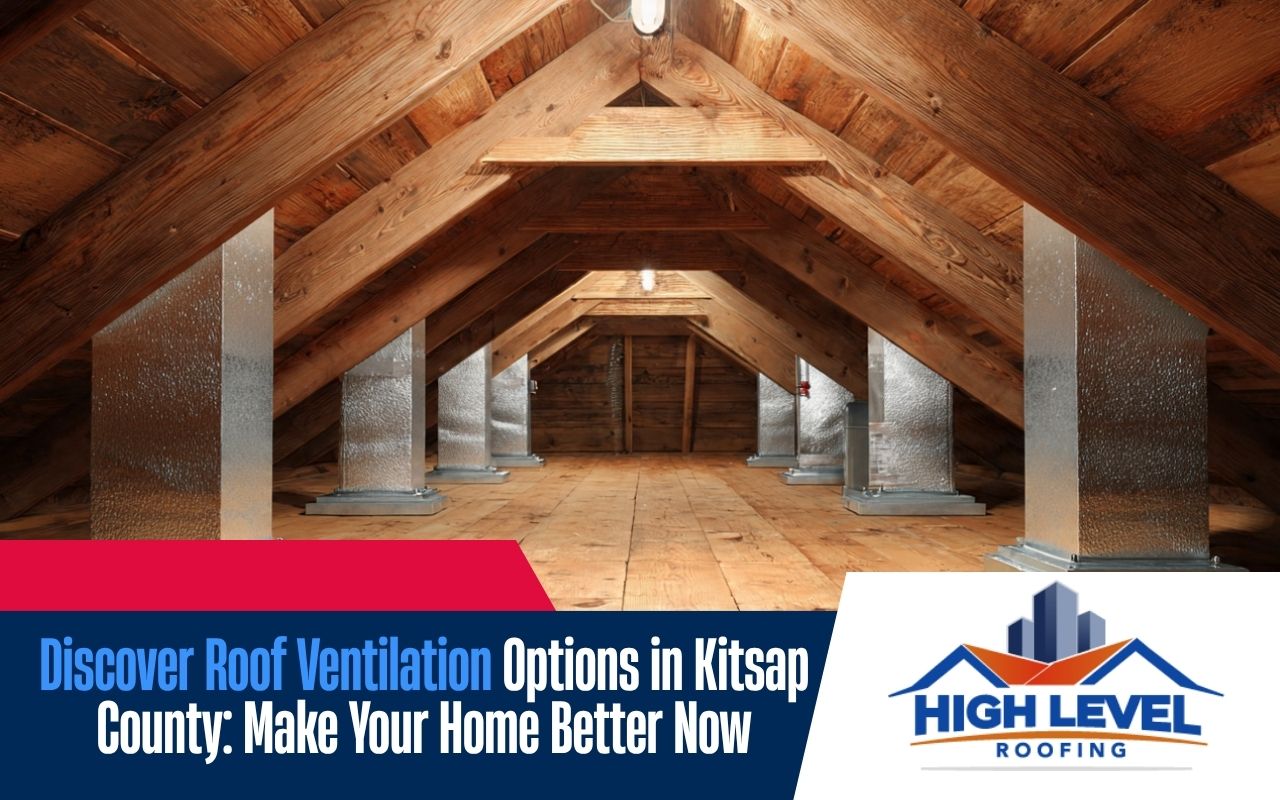
Fresh air enters through soffit or eave vents. Then it exits through ridge, gable, or roof vents. This steady flow reduces moisture and regulates attic heat. Consequently, the attic stays drier in a wet climate.
Intake and exhaust balance
Ventilation works best with a balanced ratio. Many pros use a guide of one square foot of vent area per 300 square feet of attic. However, poor balance can reduce airflow. That is why Kitsap County common roof problems often include condensation damage.
Common Types of Roof Ventilation Systems
Most homes use passive or powered systems. Passive options rely on natural movement, so they use no electricity. Powered options use fans or turbines, so they can boost air exchange when needed.
- Passive: ridge vents, soffit vents, gable vents
- Powered: electric attic fans, solar attic fans, turbines
- Hybrid: ridge-and-soffit plus a solar fan for peak heat
Pros and Cons of Different Ventilation Options
Ridge vents with soffit vents can provide steady airflow and low upkeep. However, they need clear soffits and careful sealing. Turbine vents can increase airflow, yet they may be more visible and sometimes noisy.
- Powered fans cool fast, but may pull indoor air without proper intake.
- Solar fans avoid grid power, yet they depend on sunlight.
- Passive systems last long, yet they require good design.
Signs Your Roof Ventilation Needs Attention
Look for heat spikes upstairs in summer. Also, watch for mold marks on sheathing. Damp insulation can sag and lose performance. In winter, ice dams can form when warm attic air melts snow near the eaves.
- Musty attic smell or visible mildew
- Rusty vents or cracked vent housings
- Ice dams or uneven roof temperatures
To stay organized, use a Kitsap County roof inspection checklist during seasonal checks. Then you can spot small issues before they grow.
DIY Maintenance Tips for Roof Ventilation Systems
Start with attic checks twice a year. Clear nests, debris, and insulation that blocks vents. Also, brush soffit screens gently and vacuum dust. Because airflow is the goal, even small blockages can matter.
- Confirm soffit vents are not covered by insulation.
- Inspect vent flashing and reseal worn caulk.
- Check for rust, cracks, or loose fasteners.
These Kitsap County roof maintenance tips pair well with shingle care. Therefore, you protect both the roof surface and the attic space.
Hiring Professionals: When to Seek Expert Help
If you see widespread moisture damage, call a pro. A full attic audit can measure airflow and review insulation depth. Also, experts can find hidden deck rot and poor soffit design. This Kitsap County roofing contractor advice can prevent repeat issues.
For tailored recommendations, High Level Roofing LLC can review vent balance and roof details. Therefore, Roof ventilation in Kitsap County upgrades fit your home, code needs, and long-term goals.
Cost Considerations and Smarter Planning
Planning starts with comparing long-term comfort gains to install effort. Passive systems often need less upkeep. Powered systems can add strong cooling help, yet they require careful intake design. Therefore, get clear scope notes before work begins.
To map your project steps, review the details in roofing and ventilation estimation guidance. Also, High Level Roofing LLC can help outline options without guesswork.
Eco-Friendly Ventilation Solutions for Sustainable Living
Solar attic fans can exhaust hot air during peak sun hours. As a result, they support summer comfort without added grid use. Another green route is a continuous ridge vent with deep soffit intake. Therefore, natural convection can do the work.
If your roof type affects airflow choices, explore roof types and ventilation fit. Then you can match vent design to your structure.
Frequently Asked Questions
How do I know if my attic has enough airflow?
Check for moisture stains, musty odors, and uneven temperatures. Also, confirm soffit vents are open. If issues persist, a ventilation audit can help.
Are ridge vents good for wet climates?
Yes, when installed well and paired with clear soffit intake. However, poor sealing can cause leaks. Therefore, installation quality matters.
Can a powered fan cause problems?
It can, if it pulls conditioned air from the home. In addition, it may depressurize the attic. Proper intake vents reduce this risk.
Does roof material change ventilation needs?
Often, yes. For example, metal and complex roof shapes may need special vent placement. If you are planning metal work, see metal roofing installation considerations.
How often should I check vents?
Twice a year is a solid routine. Also, check after major storms. Quick checks help you catch blockages early.
Enhancing Comfort and Efficiency with the Right Airflow
Roof ventilation in Kitsap County supports a healthier attic and a longer roof life. Therefore, small improvements can reduce moisture risk and help manage heat. If you want a local review, High Level Roofing LLC can guide next steps based on your roof layout.
For a targeted evaluation of Roof ventilation in Kitsap County, reach out through contact High Level Roofing LLC for a ventilation review. Then you can choose fixes that fit your home and climate.