
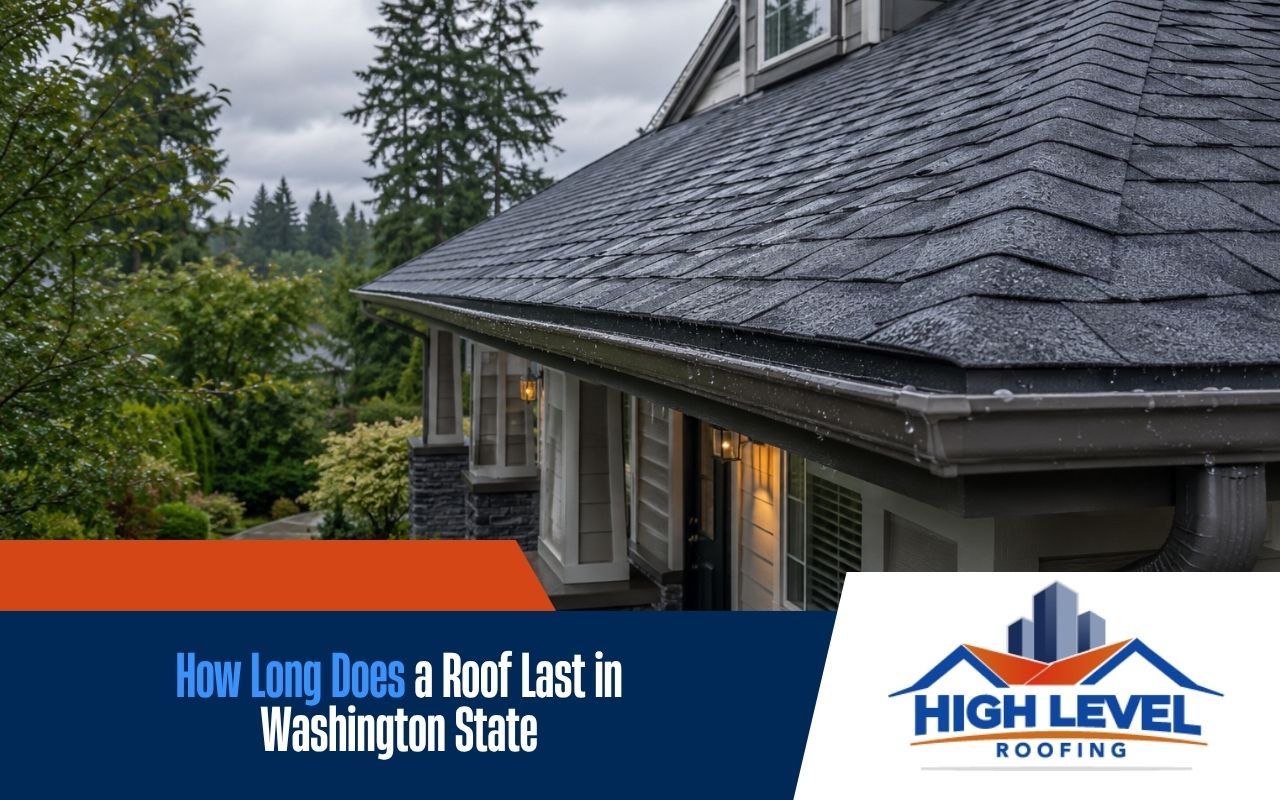
Knowing how long does a roof last in Washington State helps you plan care before small roof problems become costly damage. Washington rain, moss, wind, and shade can all affect your roof lifespan. For a helpful material comparison, see our roofing materials guide for Washington homes.
At High Level Roofing LLC, we look at your roof as part of your whole home. The right material, proper ventilation, clean gutters, and regular inspections can make a clear difference in your roof replacement timeline.
Factors That Shape Roof Lifespan In Washington
Washington homes face moisture for much of the year. Rain can sit under debris, moss can hold water against shingles, and shaded areas may dry slowly. These conditions often shorten roof lifespan when maintenance is delayed.
- Frequent rain can weaken older shingles and flashing.
- Moss and algae can trap moisture on the roof surface.
- Poor attic ventilation can lead to condensation under the roof deck.
- Low-slope areas may drain more slowly than steep roof sections.
- Tree branches can drop leaves, needles, and limbs onto the roof.
Common Roofing Materials For Washington Homes
The answer to how long does a roof last in Washington State depends strongly on the material. Asphalt shingles are common because they are practical and familiar. Metal roofing is often chosen for long-term value. Cedar and tile can also work, but they need the right home and care plan.
- Standard asphalt shingles often last about 15 to 25 years with steady care.
- Architectural shingles may last longer when moss and debris are controlled.
- Metal roofing can offer a much longer service life in wet climates.
- Cedar shake needs more upkeep because moisture can lead to rot.
- Tile roofing can last many years, but the roof structure must support it.
How Does Rain Affect Roof Longevity?
Rain is one of the biggest reasons homeowners ask how long does a roof last in Washington State. Water can wear down shingles, enter weak flashing points, and damage roof decking if problems are ignored. Clean gutters and clear valleys help water move away from the home.
With High Level Roofing LLC, you get guidance based on the condition of your roof, not guesswork. We check for areas where water may collect, especially around chimneys, vents, skylights, valleys, and roof edges.
Warning Signs Your Roof May Need Replacement
Knowing when to replace roof in WA starts with simple visual signs. A roof does not need to be leaking to be near the end of its life. Curling shingles, granule loss, soft decking, and repeated repairs can all point to a roof replacement timeline.
- Shingles are cracked, curled, missing, or loose.
- Green moss or black streaks keep returning after cleaning.
- Granules collect in gutters or near downspouts.
- Ceilings or attic areas show stains after rain.
- The roof looks uneven, soft, or sagging in some areas.
Many homeowners ask whether they should wait for a leak. Our guide on replacing a roof before it leaks explains why early action can protect the home from hidden water damage.
Asphalt And Metal Roof Replacement Timelines
Asphalt shingles may need replacement sooner in wet, shaded, or moss-prone areas. This is why the question how often should replace roof does not have one simple answer. Age matters, but the real condition of the roof matters more.
The metal roof lifespan is often much longer than asphalt when the system is installed well. Metal sheds rain quickly and does not rot like wood. For more detail, review our guide on how long a metal roof can last.
Smart Maintenance For A Rainy Climate
Maintenance helps extend roof lifespan and keeps your roof replacement timeline easier to plan. Clearing debris, trimming branches, checking flashing, and watching attic moisture can reduce wear. These steps are especially important in areas with heavy rain and shade.
Our team at High Level Roofing LLC can help you understand whether your roof needs repair, maintenance, or full replacement. A roof inspection gives you a clearer answer than age alone, especially when Washington weather has been hard on your home.
Frequently Asked Questions
How long does a roof last in Washington State?
How long does a roof last in Washington State depends on material, installation quality, ventilation, shade, moss growth, and maintenance. Asphalt roofs often last less time than metal roofs in wet areas, while proper care can help most roof systems last longer.
When should I replace my roof in WA?
You should consider replacement when shingles curl, leaks appear, moss keeps returning, granules are missing, or repairs become frequent. Our article about when to replace a roof before leaks start can help you compare warning signs.
Does a metal roof last longer in Washington?
Yes, a metal roof often lasts longer because it sheds rain well and resists rot. To compare expected service life, visit our page about metal roof lifespan for homeowners.
Which roofing material is best for wet weather?
The best choice depends on your home, budget, roof slope, and long-term plans. Asphalt, metal, cedar, and tile each have different strengths. Our Washington roofing material options guide can help you compare them.
Can maintenance delay roof replacement?
Yes, maintenance can delay replacement when the roof is still structurally sound. Cleaning gutters, removing debris, treating moss, and fixing small flashing issues can help reduce water damage and support a longer roof lifespan.
Plan A Roof That Protects Your Home
When you choose High Level Roofing LLC, we help you make a clear plan for your roof, your home, and Washington weather. A careful inspection can show whether maintenance, repair, or replacement is the better next step.
At High Level Roofing LLC, we can inspect your roof and explain your options in simple terms. To plan the right next step, visit our roofing contact page.