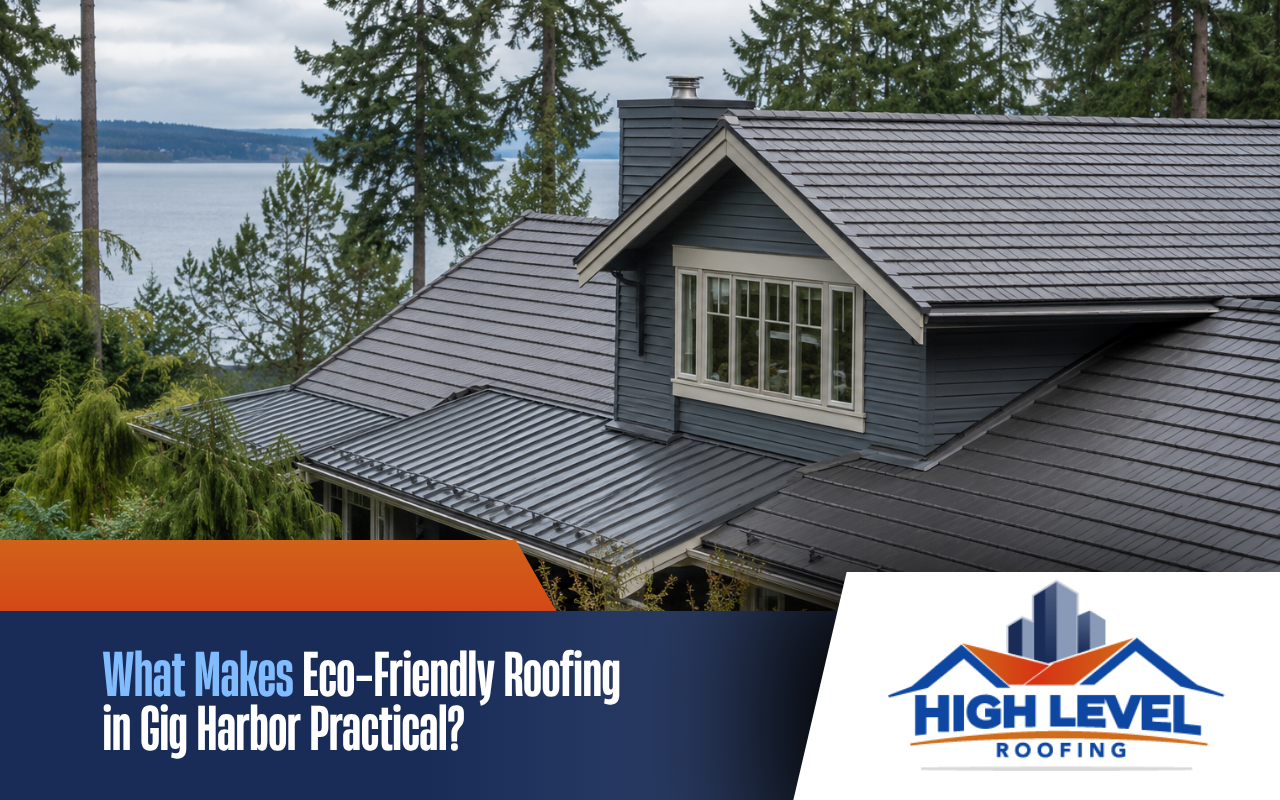
Choosing the right roof can improve comfort, appearance, durability, and environmental performance. Eco-friendly roofing in Gig Harbor gives homeowners a practical way to reduce waste while preparing for the Pacific Northwest’s wet climate.
At High Level Roofing LLC, we compare materials based on moisture resistance, maintenance, energy use, lifespan, and home style. This clear approach helps you choose a roof that protects your property without giving up curb appeal or long-term value.
You can also review our roofing services as you plan your next project.
Understand the Benefits of Sustainable Roofing
Eco-friendly roofs can support more than basic weather protection. Reflective surfaces may absorb less heat, while proper insulation and ventilation can help indoor spaces feel more stable.
Durable materials may also reduce how often a roof needs replacement. Over time, that can lower waste and support better long-term value for the home.
Sustainable Roofing Benefits
- Longer material life when installed and maintained well
- More recyclable or recycled material choices
- Better moisture control for a damp climate
- Improved comfort through a complete roofing system
- Less waste from frequent replacement cycles
With High Level Roofing LLC, you receive guidance that considers both the roof material and the systems below it. Underlayment, flashing, ventilation, and drainage all affect how well a sustainable roof performs.
Compare Materials for Pacific Northwest Weather
The best roofing materials in Pacific Northwest homes must handle rain, wind, shade, debris, and changing temperatures. Metal roofing is durable, recyclable, and effective at shedding water.
Architectural shingles offer a familiar look, while composite and recycled shingles can combine design flexibility with lower material waste. Synthetic slate gives the look of natural stone with less weight and maintenance.
Solar-ready roofing can support future energy goals, while living roofs may help manage some stormwater. Each option needs the right structure, slope, drainage, and installation method.
Our certifications and product standards can help you understand how material requirements connect with proper installation.
Key Takeaway
A sustainable roof must fit the local climate first. In Gig Harbor, rain control, ventilation, flashing, and drainage matter as much as the material itself.
Use a Roofing Material Comparison Before Choosing
A useful roofing material comparison should look at performance, maintenance, design, and expected service life. The right choice depends on your home’s structure, roof slope, weather exposure, and long-term goals.
Eco-Friendly Roofing Material Guide
| Roofing Option | Eco-Friendly Benefit | Best Fit |
|---|---|---|
| Metal roofing | Often recyclable and long-lasting | Homes that need strong rain shedding and durability |
| Architectural shingles | Durable option with broad design flexibility | Homeowners who want a familiar roof style |
| Recycled composite shingles | May reduce demand for new raw materials | Homes that need design flexibility with lower waste goals |
| Synthetic slate | Offers slate appearance with less weight | Traditional homes that need a refined look |
| Solar-ready roofing | Can support future energy upgrades | Homes planning solar panels or energy improvements |
Prepare the Roof System for Rain and Moisture
A sustainable material cannot perform well without a water-control system. Gig Harbor homes need roofing details that move rain away from the structure and limit moisture around seams, vents, chimneys, and roof edges.
Moisture-Control Planning Steps
- Use moisture-resistant underlayment suited to the roof type.
- Install flashing carefully around all roof openings.
- Balance attic intake and exhaust ventilation.
- Keep gutters and drainage paths clear.
- Seal roof penetrations with approved materials.
- Match the roofing product to the roof slope.
Routine checks can reveal lifted materials, damaged flashing, moss, blocked drainage, or worn sealant before water reaches the interior. Our team can evaluate these details as part of a wider roofing plan.
Key Takeaway
Moisture control is the core of sustainable roofing in wet climates. The roof material, underlayment, flashing, ventilation, and drainage should work together.
Review Roofing Materials Cost Through Long-Term Value
Roofing materials cost can vary because each system has different products, labor needs, structural requirements, maintenance demands, and expected service life.
A lower starting cost may not create the best value if the material needs earlier replacement. Homeowners should compare durability, maintenance, energy performance, storm resistance, warranty terms, disposal needs, and recyclability.
Incentives for solar or energy upgrades can change, so current programs should be verified before making a financial decision.
Explore our available roofing options to see how different systems may fit your home and long-term priorities.
Match Sustainable Materials With Home Design
Eco-friendly roofing can suit modern homes, traditional houses, waterfront properties, and classic bungalows. Standing seam metal can create a clean modern look.
Synthetic slate may fit a traditional design, while recycled composite shingles can resemble cedar or stone. Color also affects appearance and heat absorption.
Lighter or reflective finishes may support better solar performance, while darker tones may fit certain architectural styles. The final choice should balance design, roof slope, weather exposure, neighborhood rules, and maintenance needs.
Key Takeaway
The best roof should match both performance and appearance. Material, color, slope, structure, and neighborhood guidelines all shape the final choice.
Plan a Reliable Eco-Friendly Roof Installation
A successful project starts with a careful review of the existing roof. The structure, decking, flashing, ventilation, drainage, and areas around vents or skylights all need attention before a new system is installed.
Installation Planning Checklist
- Check the deck for moisture damage or weak areas.
- Select underlayment that fits the roofing material.
- Confirm drainage and ventilation needs.
- Follow the approved fastening method.
- Review local permits and neighborhood guidelines.
- Plan future solar work before choosing a roof system.
When you choose High Level Roofing LLC, we plan around the home, the material, and Gig Harbor’s weather. You can share your roofing goals with our team before deciding on a system.
Frequently Asked Questions
What is the best eco-friendly roof for Gig Harbor?
Metal roofing is a strong option because it is durable, recyclable, and suited to heavy rain when installed correctly. Composite shingles made with recycled materials can also offer reliable protection and flexible design. Review our roofing material options for more context.
How can I make my roof more environmentally friendly?
Choose long-lasting or recyclable materials, improve attic insulation, maintain ventilation, and keep drainage clear. Regular care can also prevent early replacement. Our roofing certifications provide added context about installation standards.
Do eco-friendly roofs last as long as traditional roofs?
Many sustainable systems can last as long as or longer than conventional materials. Actual performance depends on material quality, installation, roof design, climate exposure, ventilation, maintenance, and manufacturer requirements.
Are metal roofs suitable for heavy rain?
Yes. A properly installed metal roof can shed water efficiently and resist moisture. Underlayment, flashing, seams, fasteners, and drainage must still be planned carefully for dependable performance in wet weather.
Can an existing home support a living roof?
Not every home can support the added weight and drainage needs of a living roof. A professional should review the structure, slope, waterproofing, and load capacity first. Use our contact page to discuss the property.
Choose a Roof That Supports Long-Term Goals
Eco-friendly roofing in Gig Harbor can help you create a durable, comfortable, and responsible home. A thoughtful comparison of metal, architectural shingles, recycled composites, synthetic slate, and solar-ready systems can narrow the options for your property.
At High Level Roofing LLC, we focus on practical recommendations based on your roof, weather exposure, design needs, and maintenance goals. Start a conversation about your Gig Harbor roof and choose a system with greater confidence.