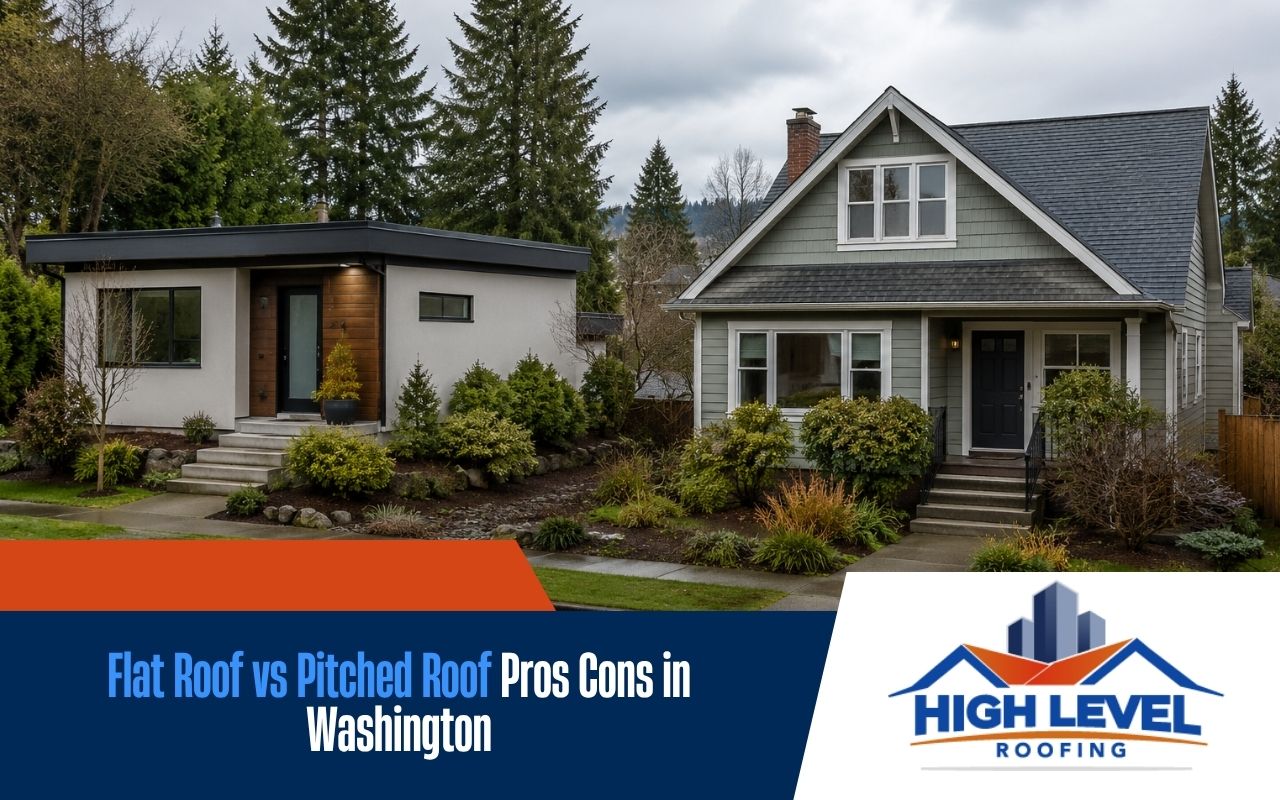
Choosing between a flat roof and a pitched roof affects drainage, maintenance, style, and long-term value. In Washington, rain, wind, and seasonal snow make this choice even more important for homes and small buildings.
At High Level Roofing LLC, we help homeowners understand different types of roofs before making a roofing decision. This guide explains flat roof vs pitched roof pros cons in Washington in a clear, practical way.
Washington Weather And Roof Performance
Washington weather can be tough on a roof. Many areas see steady rain, damp air, strong wind, and snow in higher elevations. These conditions make drainage and material selection key parts of any roof plan.
A flat roof can work well when it has the right slope, drains, and waterproof membrane. A pitched roof uses its angle to move rain and snow away faster. When comparing flat roof vs pitched roof pros cons in Washington, moisture control is often the biggest factor.
How Do Flat And Pitched Roofs Compare?
Flat roofs often fit modern homes, additions, and buildings with clean lines. They may also create usable space for equipment, solar panels, or a roof deck when the structure is designed for it.
Pitched roofs have a more traditional look and often perform well in wet regions. Their slope helps water leave the roof surface quickly, which can reduce the risk of standing water and related damage.
Flat Roof Benefits For Modern Homes
Flat roofs are popular for homeowners who want a simple, modern shape. They can also make inspections easier because the surface is usually more accessible than a steep roof.
- They create a clean look for modern homes and additions.
- They can support rooftop features when properly engineered.
- They may allow easier placement of HVAC units or solar panels.
- They often use fewer framing materials than steep roof systems.
With High Level Roofing LLC, you can review flat roof options that match your home’s design, drainage needs, and local weather exposure.
Pitched Roof Benefits For Wet Climates
Pitched roofs are common across Washington because they help shed rain and snow. The slope works with gravity, which can lower the chance of water sitting on the roof for long periods.
They also support many roofing materials, including asphalt shingles, metal, and tile. For homeowners comparing roof shape types, a pitched roof can offer strong curb appeal and dependable runoff. You can also explore tile roof styles for King County homes when considering a more defined roof profile.
Maintenance And Lifespan Differences To Expect
Maintenance needs depend on the roof design, material, installation quality, and weather exposure. Still, flat and pitched roofs usually require different care routines.
- Flat roofs need regular checks for ponding water and clogged drains.
- Flat roof membranes should be inspected for cracks, punctures, and seam wear.
- Pitched roofs need shingle, flashing, and gutter checks.
- Pitched roofs may need fewer drainage repairs when installed correctly.
Our team at High Level Roofing LLC can explain how maintenance affects long-term performance. This is important when weighing flat roof vs pitched roof pros cons in Washington for a real home, not just a design plan.
Roof Design Types And Material Choices
There are many roof design types, and each one changes how a home handles water, wind, attic space, and appearance. Some common options include flat, gable, hip, shed, and mansard designs.
- Flat roofs suit modern homes and low-slope building sections.
- Gable roofs use two sloped sides for simple water runoff.
- Hip roofs slope on all sides and can handle wind well.
- Shed roofs use one slope for a clean, modern shape.
Homeowners often hear about 3 types of roofs, but there are more choices than flat, pitched, and shed designs. The right option depends on your home, budget, climate, and goals. Our roofing materials guide for Washington can help you compare materials with local weather in mind.
Frequently Asked Questions
Is a flat roof a good choice in Washington?
A flat roof can be a good choice when it has proper drainage, strong waterproofing, and regular maintenance. To compare it with other types of roofs, review our guide to common roof types.
Does a pitched roof last longer than a flat roof?
A pitched roof often lasts longer because it sheds rain and snow more easily. Lifespan also depends on the material, ventilation, installation, and upkeep.
Which roof style is better for heavy rain?
A pitched roof is often better for heavy rain because the slope moves water away quickly. Still, a well-built flat roof can perform well with the right membrane, drains, and maintenance plan.
What roofing material should I choose in Washington?
The best material depends on your roof slope, home style, and weather exposure. Our Washington roofing materials guide explains common choices in simple terms.
Should I talk to a roofer before choosing a roof shape?
Yes. A roofer can review your structure, drainage, and goals before you choose. When you choose High Level Roofing LLC, we can discuss your roof needs through our contact page.
Choose A Roof That Fits Washington Homes
The best choice depends on your home’s shape, location, budget, and maintenance plans. Flat roofs can offer modern style and usable space. Pitched roofs can offer strong drainage and classic curb appeal.
When comparing flat roof vs pitched roof pros cons in Washington, focus on water control, lifespan, material fit, and daily use. At High Level Roofing LLC, we can help you compare roof shape types and choose a practical option for your home. Start by sending your questions through our roofing contact form.