
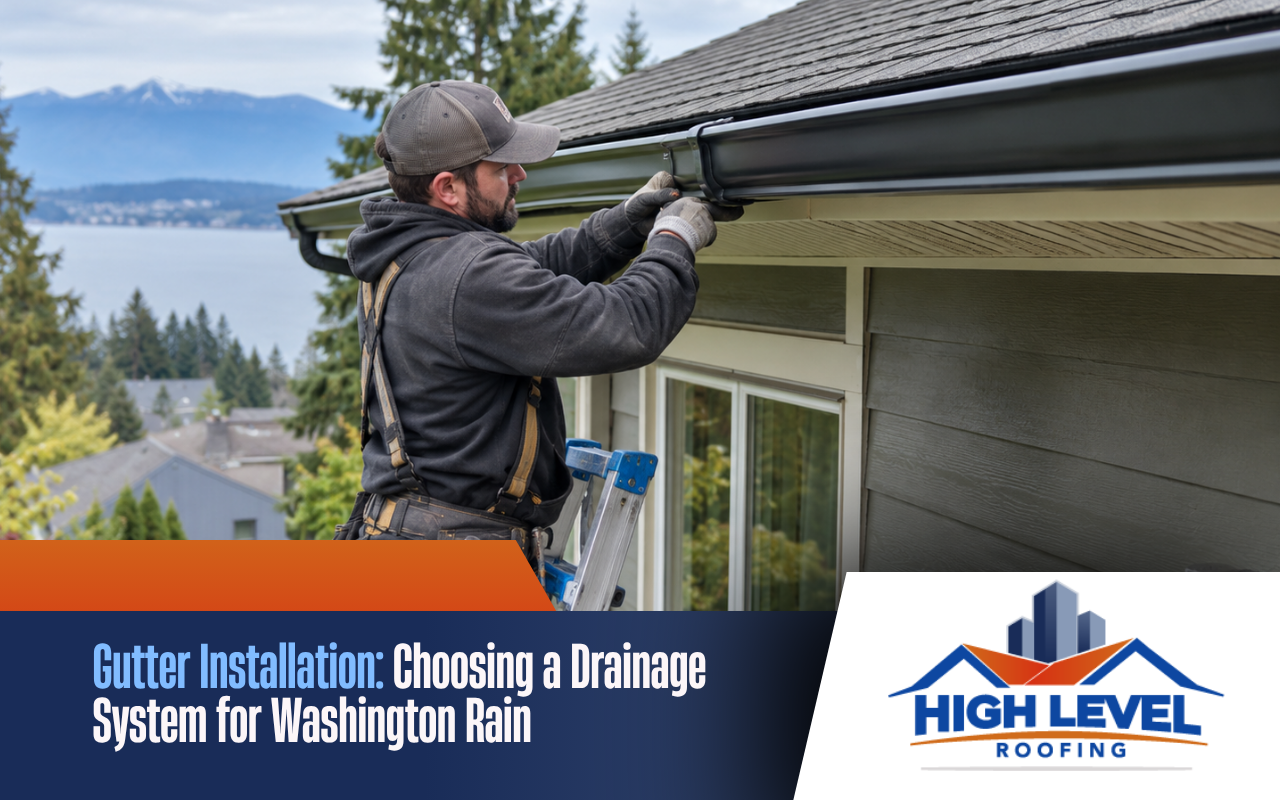
A good roof does more than shed water. It also needs a dependable way to move that water away from fascia, siding, walkways, and the foundation. That makes gutter installation an important part of the roofing system, especially in Western Washington where long wet periods can expose weak drainage quickly.
If you are already planning a roof project, reviewing our roofing installation services in Spanaway can help you think about the roof edge, flashing, gutters, and downspouts as one connected system rather than separate parts.
What Makes a Gutter System Work Well?
Gutters need the right size, slope, outlet placement, fasteners, and downspout locations for the roof area they serve.
Before installation, the contractor should look at roof valleys, long roof sections, lower roof areas, landscaping, driveway locations, and places where water already collects.
Types of Gutters for Pacific Northwest Homes
Seamless Aluminum Gutters
Seamless aluminum is a common residential choice because long sections can be formed with fewer joints. Fewer seams can reduce the number of potential leak points when the system is installed and maintained correctly.
Sectional Gutters
Sectional gutters are assembled from shorter pieces. They can work well, but each connection must remain sealed and supported. Over time, joints may need closer maintenance.
Steel Gutters
Steel can provide added strength, but finish quality and corrosion protection matter in a wet climate. Scratches and exposed metal should be addressed before rust spreads.
Commercial and High-Capacity Systems
Larger roofs may need wider gutters, larger outlets, additional downspouts, scuppers, or other drainage solutions. Commercial systems should match roof design and runoff demands.
Seamless Gutters vs. Sectional Gutters in Washington
| Feature | Seamless Gutters | Sectional Gutters |
|---|---|---|
| Number of joints | Fewer joints along long runs | More connections between sections |
| Fit | Formed to project dimensions | Built from standard-length pieces |
| Leak potential | Mainly at corners and outlets when maintained | Additional joints create more areas to monitor |
| Repair flexibility | May require specialized replacement of long sections | Individual sections can sometimes be replaced |
| Best choice | Often preferred for custom residential runs | Useful where sectional construction fits the project |
Warning Signs Your Current Gutters Need Attention
- Water spills over the gutter during moderate rain
- Sections pull away from the fascia
- Visible rust, holes, or split seams appear
- Water stands in the gutter after rain ends
- Downspouts repeatedly clog or disconnect
- Soil erodes beneath the roof edge
- Water stains appear on fascia or siding
Overflow does not always mean the gutter is too small. Debris, poor slope, loose hangers, blocked downspouts, or concentrated water from a roof valley can create the same symptom.
If the roof edge is damaged as well, our roof repair services in Spanaway can address roofing and drainage problems together.
Installation Details That Matter in Wet Weather
Good gutter installation starts with secure attachment to sound fascia and a controlled slope toward outlets. Downspouts should release water to an appropriate drainage location without creating erosion, slippery walkways, or water returning toward the foundation.
Expert Tip: Watch your gutters during a steady rain from a safe ground-level position. Water movement often reveals low spots, leaking corners, undersized outlets, or downspouts that are not keeping up.
Permits and Drainage Considerations
A basic gutter replacement may have different permit requirements than a project that changes structural components, roof drainage, or site drainage.Before major alterations, confirm local rules and any stormwater requirements that apply to the property.
Commercial projects can have additional design and drainage considerations. A professional evaluation helps match the gutter and downspout plan to the building rather than relying on a one-size-fits-all approach.
Why Pair Gutter Work With a Roof Evaluation?
Gutters attach at one of the roof’s most moisture-sensitive areas. If fascia is soft, drip edge is damaged, or roofing has failed near the eave, new gutters alone may hide the issue instead of solving it.
At High Level Roofing LLC, we bring more than 25 years of roofing experience to residential and commercial properties. We are licensed, GAF-certified, and work with respected roofing materials, including Malarkey Roofing Products.
Plan Your Gutter Installation
Our hours are Monday through Saturday from 8:00 a.m. to 4:30 p.m. Estimates are free for customers within a 50-mile radius of Tacoma. Properties beyond that radius are subject to an estimate fee.
You can also request a roofing project quote when you are comparing gutter and roofing improvements.
Contact High Level Roofing LLC for your gutter project and get a drainage plan built around your roof and property.
Frequently Asked Questions
Are seamless gutters better than sectional gutters?
Seamless systems have fewer joints along long runs, which can reduce areas that need sealing and maintenance. The best option still depends on the building, budget, and drainage layout.
How do I know what gutter size my home needs?
Gutter sizing depends on roof area, roof pitch, rainfall, valley concentration, outlet size, and downspout placement. Larger roofs may require higher-capacity drainage.
Why do my gutters overflow even after cleaning?
Poor slope, small outlets, too few downspouts, sagging sections, or concentrated runoff from valleys can cause overflow even when the gutter is clear.
Can new gutters be installed with a roof replacement?
Yes. Coordinating the work can make it easier to inspect fascia, roof edges, drip edge, and drainage before the finished system is completed.
Do you install gutters for commercial properties?
At High Level Roofing LLC, we work with residential and commercial customers. The gutter plan is based on the roof type, building size, drainage needs, and project conditions.