
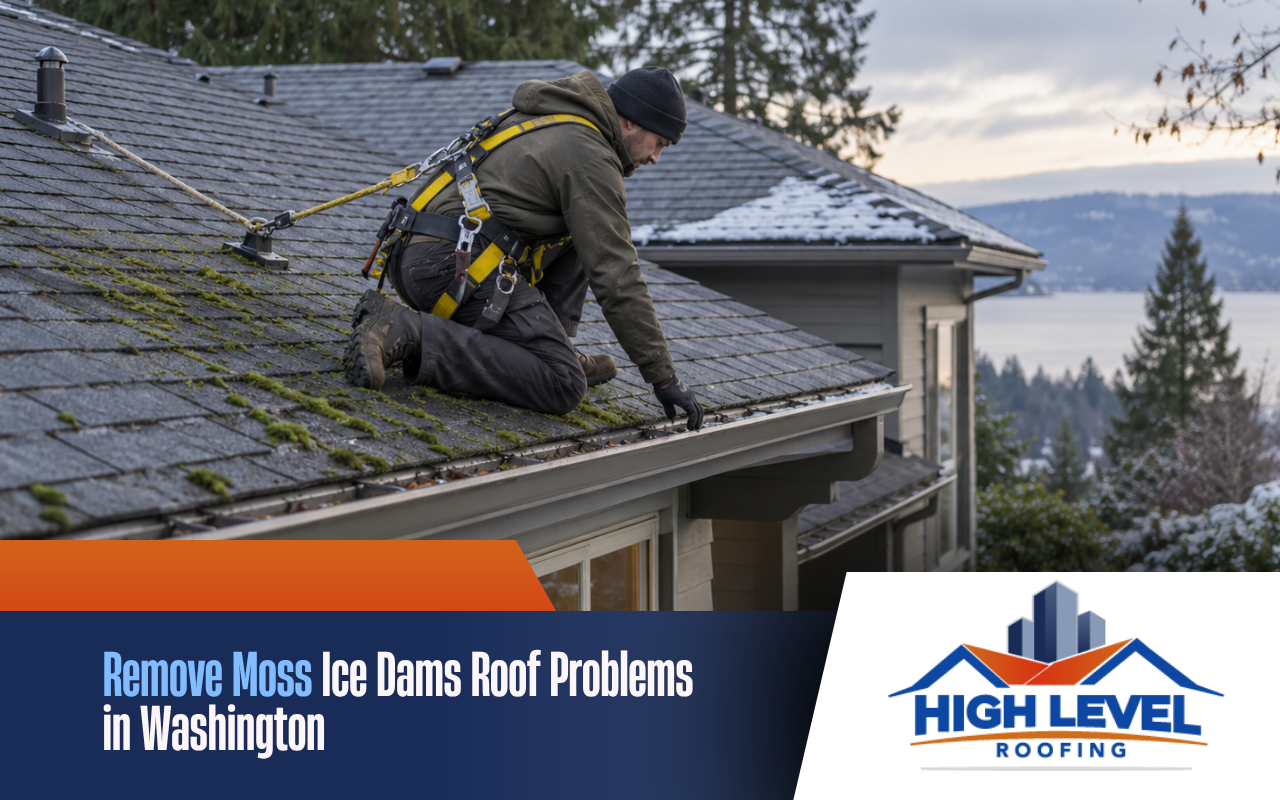
Washington roofs face months of rain, shaded surfaces, falling debris, and winter temperature swings. Those conditions can make moss and ice buildup more than a cosmetic problem. Homeowners who need to Remove moss Ice dams roof problems should act before trapped moisture begins affecting shingles, flashing, gutters, or the roof deck.
At High Level Roofing LLC, we bring more than 25 years of roofing experience to homes across Washington. If you are unsure whether buildup needs cleaning, repair, or a closer inspection, contact our roofing team to discuss what you are seeing.
Why Washington Roofs Develop Moss and Ice
Moss thrives where roofing stays damp and shaded. Tree cover, north-facing slopes, clogged valleys, and organic debris can keep sections of a roof wet long after rainfall stops. Once established, moss can hold even more moisture against the roofing surface.
Ice dams develop differently. During freezing weather, heat reaching the roof can melt snow or frost on warmer sections. That water can move toward colder eaves and freeze again, creating a ridge that interferes with drainage.
- Persistent shade can slow roof drying after rain.
- Leaves and needles can trap moisture around shingles.
- Blocked gutters can interfere with normal drainage.
- Uneven attic temperatures can contribute to winter ice buildup.
- Older or damaged roofing materials may be more vulnerable to trapped moisture.
These conditions do not automatically mean a roof needs replacement. They do mean the roof deserves attention before a small maintenance concern becomes a larger repair.
Warning Signs That Should Not Be Ignored
A little green growth near a shaded edge may not look urgent. However, homeowners should watch how quickly moss spreads and whether other signs appear around the same area.
Look for thick moss between shingles, lifted edges, granules collecting in gutters, standing debris, water stains, damaged flashing, or repeated ice along the eaves. Indoor stains near ceilings or exterior walls also deserve prompt evaluation because the visible symptom may be far from the actual entry point.
When you choose High Level Roofing LLC, we can examine the roof condition and explain practical next steps. Homeowners concerned about active damage can ask about a roof evaluation rather than guessing from the ground.
How Should Moss and Ice Be Removed Safely?
Trying to Remove moss Ice dams roof buildup with aggressive tools can create unnecessary damage. Pressure washing, hard scraping, or striking frozen roof edges may disturb roofing materials. Walking on a wet, moss-covered, or icy roof also creates a serious fall risk.
- Inspect the roof from a safe location before choosing a removal method.
- Clear accessible gutters and drainage paths without damaging roof edges.
- Use roof-appropriate moss treatment methods instead of aggressive pressure.
- Avoid chopping or hammering ice from shingles and flashing.
- Address the moisture, shade, or heat conditions that caused the buildup.
- Call a roofing professional when access or roof conditions are unsafe.
A careful approach protects more than the visible shingles. Flashing, vents, underlayment, gutters, and surrounding roof components can all be affected by improper removal.
Compare Short-Term Removal With Long-Term Prevention
Removing visible buildup solves only part of the problem. Long-term care focuses on why the moss or ice formed and what can reduce the chance of repeated trouble.
| Roof Concern | Immediate Approach | Long-Term Focus |
|---|---|---|
| Moss patches | Use a roofing-safe removal method | Improve drying and reduce debris |
| Clogged valleys | Remove leaves and organic material | Schedule seasonal roof checks |
| Ice near eaves | Avoid damaging frozen roofing | Review attic heat and ventilation conditions |
| Blocked gutters | Restore water flow | Keep drainage paths clear |
| Recurring moisture | Identify visible trouble areas | Check roofing, flashing, and surrounding conditions |
Our team at High Level Roofing LLC can help homeowners decide whether maintenance is enough or whether damaged materials need attention. For properties within 50 miles of Tacoma, customer estimates are free. Locations beyond that radius may have an estimate fee.
Year-Round Moss Prevention for Washington Homes
Moss prevention after removal works best as a routine instead of a one-time project. Western Washington homeowners in particular often deal with long wet periods and tree-covered neighborhoods where roofs may dry slowly.
- Check roof valleys after heavy leaf and needle fall.
- Keep gutters and downspouts moving water away efficiently.
- Monitor shaded roof slopes where moss has appeared before.
- Look for loose, cracked, or displaced roofing after storms.
- Watch attic and ceiling areas for unexplained moisture marks.
- Arrange professional evaluation when growth returns quickly.
Preventive care can also reveal aging components before they create interior damage. If recurring moss is appearing despite regular cleaning, discuss the recurring roof problem with our team.
Permits, Insurance, and Roofing Work in Washington
Roofing requirements can vary by city, county, project type, and the amount of work being completed. A simple cleaning project is different from structural repair or full replacement. Before major roofing work begins, homeowners should confirm whether the local permitting authority requires permits, inspections, or specific construction documentation.
Washington homeowners should also work with properly registered roofing professionals. With High Level Roofing LLC, customers have a licensed contractor with GAF-certified contractor credentials and experience with Malarkey Roofing Products.
When storm, snow, or ice damage may involve insurance, photograph visible damage and review your policy before permanent repairs begin. Coverage depends on the policy and cause of loss. Keep records of the damage, conversations, estimates, and related repair documents.
Frequently Asked Questions
Can moss damage asphalt shingles?
Moss can hold moisture against the roofing surface and may grow around shingle edges. Thick or recurring growth deserves attention, especially when shingles already show wear. If you notice lifted areas or widespread moss, contact our team about the roof condition.
Will removing moss stop it from returning?
Not always. Moss prevention after removal in Port Orchard, WA and other damp Washington communities requires attention to shade, debris, drainage, and recurring moisture. Removing growth without addressing those conditions may allow it to return.
Are ice dams always caused by bad roofing?
No. Ice dams can involve roof temperature differences, insulation, ventilation, snow conditions, and outdoor temperatures. A roofer can check visible roofing conditions while other parts of the home may also need evaluation. You can ask us about recurring ice buildup.
When should a homeowner call a roofer?
Call when moss is widespread, shingles appear damaged, water is entering the home, ice repeatedly forms along roof edges, or safe access is difficult. Professional evaluation is also useful when you cannot tell whether cleaning or repair is the better option.
Does homeowner insurance cover moss or ice damage?
Coverage depends on the policy, cause of damage, maintenance history, and circumstances of the loss. Homeowners should review coverage directly with their insurance company. For roofing documentation or an evaluation of visible damage, contact our Washington roofing team.
Protect Your Roof Before Moisture Causes More Damage
It is easier to manage moss, drainage problems, and winter buildup before water reaches vulnerable roof components. A good plan to Remove moss Ice dams roof concerns combines safe removal with regular inspections, clear drainage, seasonal maintenance, and attention to recurring trouble areas.
At High Level Roofing LLC, we are available Monday through Saturday from 8:00 a.m. to 4:30 p.m. Our experienced team works with homeowners across Washington who want clear guidance and practical roofing solutions. To discuss moss, ice, leaks, or another roof concern, request a roofing estimate and take the next step toward protecting your home.