A fall roof check should do more than count missing shingles. A useful roof inspection Tacoma WA fall should follow how water moves across shingles, flashing, valleys, gutters, roof edges, and into the attic before heavy seasonal rain increases the stakes. request your fall inspection when you want a clearer picture of roof condition before winter weather arrives.
Start With Roof Drainage Before Looking For Small Defects
Leaves, needles, moss, and debris can slow drainage in valleys and gutters. Water that cannot move away efficiently may collect near roof edges, flashing, or penetrations where small defects become more important.
Our Monday-through-Saturday schedule from 8:00 a.m. to 4:30 p.m. supports planned seasonal inspection before wetter weather becomes more persistent.
Shingle Condition Matters Most Where Water Concentrates First
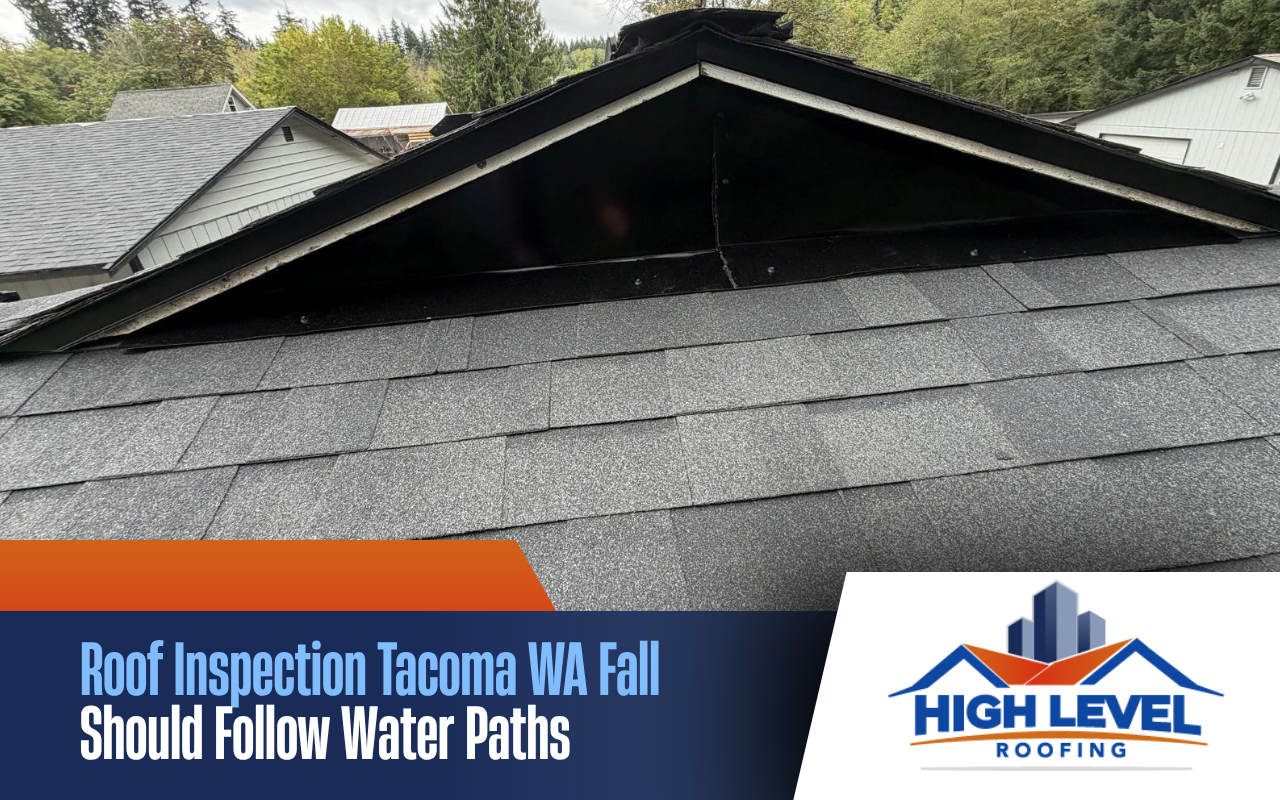
Valleys, lower roof edges, dormer transitions, and areas below roof penetrations often deserve more attention than open field shingles. Look for lifted tabs, exposed fasteners, missing granules, and damaged seal lines.
For installation information, visit our explore Tacoma roof installation page.
Attic Evidence Can Confirm What Exterior Inspection Suggests
schedule your fall inspection when exterior wear is paired with attic staining, damp insulation, or daylight around penetrations. Interior evidence can help distinguish cosmetic surface aging from a water-entry problem that needs faster attention.
At High Level Roofing LLC, we bring 20+ years of experience to inspections where the roof surface and attic conditions need to be evaluated together.
Use This Fall Roof Inspection Sequence In Tacoma
- Review gutters and drainage
- Check valleys and roof edges
- Inspect flashing and penetrations
- Assess shingle wear patterns
- Review attic moisture evidence
- Prioritize repairs before winter
Flashing Should Be Checked Before Sealant Is Added
Cracked sealant can be visible, but the underlying flashing condition matters more. Adding more sealant over loose, corroded, or poorly positioned flashing can hide the problem without restoring proper water control.
These Fall Roof Conditions Deserve Faster Professional Follow-Up
- Fresh ceiling stains
- Loose or missing shingles
- Damaged chimney flashing
- Gutters pulling away
- Soft roof-edge materials
Inspection Cost Depends On Scope Access And Purpose
Inspection pricing can vary based on roof size, slope, access, complexity, report needs, and whether specialty evaluation is involved. Homeowners should compare what the inspection includes rather than relying on one generic price expectation.
Roof Replacement Decisions Should Follow Condition Not Season
Fall is a useful time to identify problems, but the season alone should not determine whether replacement is necessary. Age, leaks, repair history, shingle condition, deck integrity, and remaining serviceability all matter.
For replacement information, visit our explore Tacoma roof replacement page.
Iko Shingles Can Support Long-Term Replacement Planning Later
Iko architectural shingles are designed around longevity and visual appeal. If inspection shows that repair is no longer practical, product comparison can become part of replacement planning after the roof condition is fully understood.
Inspection Reports Should Separate Urgent And Routine Findings
A useful report distinguishes active leaks or failed components from normal aging, maintenance items, and future concerns. This helps homeowners plan repairs in the right order instead of treating every observation as equally urgent.
Our team at High Level Roofing LLC focuses on practical priorities rather than turning every finding into a replacement recommendation.
Roofing Quotes Should Follow Inspection Findings Not Guesswork
For repair or replacement pricing after inspection, visit our request your roofing quote page. A quote is more useful when the underlying defect and required scope are already clear.
Roof Age Should Be Considered Alongside Visible Wear Patterns
Two roofs with the same age can perform very differently depending on installation quality, ventilation, maintenance, weather exposure, and prior repairs. Age is useful context, but it should not replace direct inspection of shingles, flashing, roof edges, and attic evidence.
This helps prevent replacement decisions based only on a calendar estimate.
Fall Inspections Should Include Nearby Tree And Debris Exposure
Branches touching the roof, heavy leaf accumulation, and shaded areas that stay damp can contribute to recurring maintenance problems. Identifying those exterior influences helps explain why some roof sections age faster than others.
Inspection Findings Should Support A Seasonal Maintenance Plan
At the end of the inspection, homeowners should understand which items need immediate repair, which can wait for routine maintenance, and which should simply be monitored through the rainy season.
Roof Ventilation Should Be Reviewed Alongside Attic Moisture
Condensation can sometimes create staining that looks similar to a roof leak. If attic airflow is restricted, moisture may collect on cooler surfaces even when exterior roofing remains intact.
Reviewing ventilation with attic evidence can help separate condensation concerns from water entering through shingles or flashing.
Fall Debris Patterns Can Reveal Repeated Drainage Trouble
If the same valley or gutter section repeatedly fills with leaves or needles, that area deserves extra attention before winter. Recurring debris can slow water movement and increase the importance of even minor defects nearby.
Frequently Ask Questions
What should a fall inspection include?
It may include shingles, flashing, valleys, gutters, roof edges, penetrations, drainage, and attic evidence where accessible.
Does every worn roof need replacement?
No. Repairability depends on age, damage extent, leak history, material condition, and surrounding roof performance.
Can homeowners inspect from the ground?
Yes. Ground-level observation can reveal missing shingles, gutter problems, debris, and visible roofline changes without rooftop risk.
Why inspect the attic too?
Attic staining, damp insulation, or daylight can reveal moisture paths that are not obvious from outside.
How often should roofs be inspected?
Frequency depends on roof age, material, weather exposure, prior damage, and manufacturer or warranty recommendations.
Inspect Water Paths Before Tacoma Fall Rain Intensifies
A thorough roof inspection Tacoma WA fall should connect drainage, flashing, shingle condition, roof edges, and attic evidence before repairs are prioritized. book your fall inspection with High Level Roofing LLC when you want to enter the rainy season with a clearer maintenance plan.