
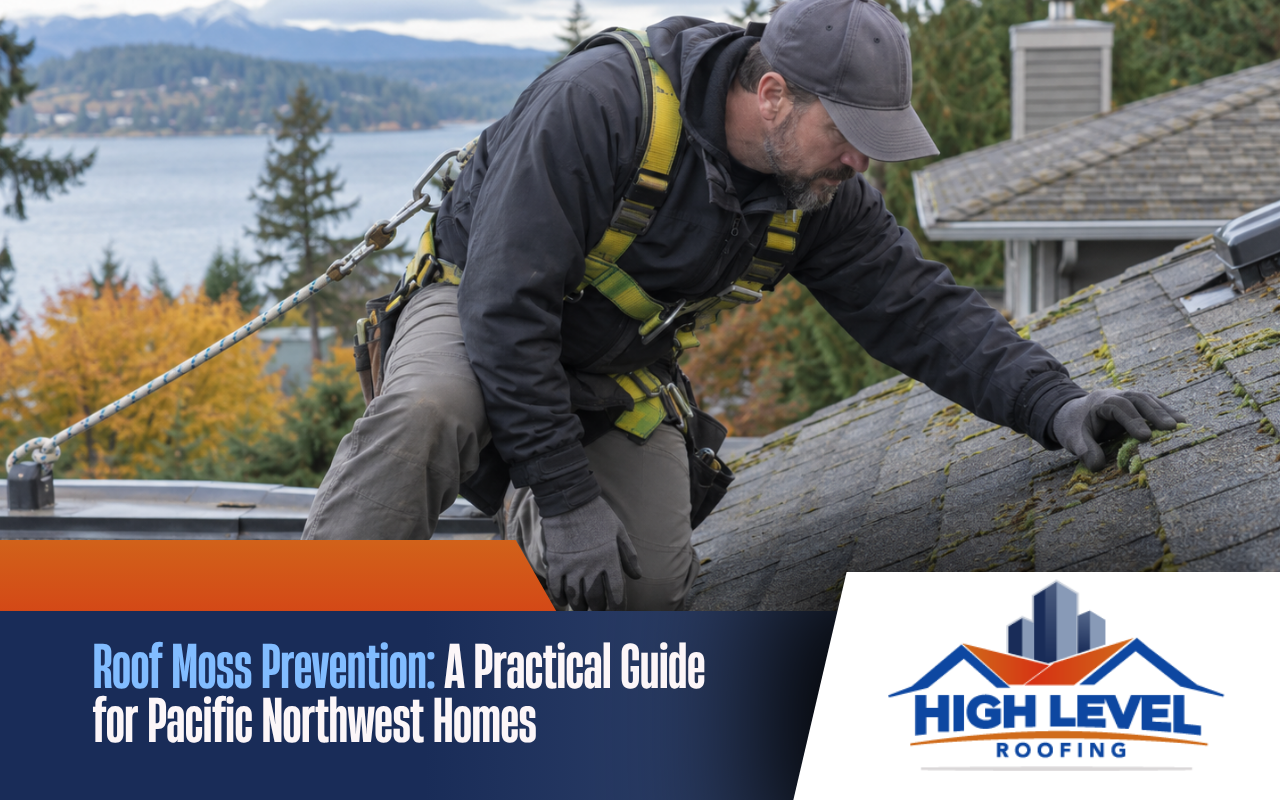
Moss can turn a shaded Washington roof green surprisingly fast. It often begins in cool, damp areas under trees or on north-facing roof slopes, then spreads where moisture stays on the surface. Good roof moss prevention is less about aggressive cleaning and more about controlling the conditions that allow moss to remain wet and established.
For homeowners in Bremerton, Port Orchard, Poulsbo, Silverdale, and nearby communities, regular roofing maintenance in Kitsap County can catch moss buildup before it interferes with drainage or starts lifting roofing materials.
Why Moss Is Common on Washington Roofs
The Pacific Northwest combines mild temperatures with long periods of moisture. Roof areas shaded by trees may dry slowly after rain. Debris can also collect in valleys and gutters, trapping additional moisture against the roof surface.
Moss is not only an appearance problem.Thick growth can hold moisture, block drainage, and make the roof slippery.
What Actually Helps Prevent Roof Moss?
Keep Organic Debris Off the Roof
Leaves, needles, small branches, and seed pods can trap moisture. Clearing them carefully helps the roof dry more evenly. Never use sharp tools that can cut or scrape roofing materials.
Improve Sunlight and Air Movement When Practical
Overhanging branches can create heavy shade and drop debris directly onto the roof. When practical, better clearance can help the roof dry faster.
Keep Gutters Flowing
Clogged gutters can hold water at the roof edge and keep fascia and nearby roofing damp. Clean drainage paths also help move Washington’s frequent rainfall away from the home more efficiently.
Use Roof-Compatible Moss Treatments
Not every chemical is safe for every roofing product, finish, landscape, or drainage system. Always use products approved for the specific roof material and follow manufacturer directions.
Roof Moss Prevention Methods Compared
| Method | Best Use | Main Caution |
|---|---|---|
| Routine debris removal | Reducing trapped moisture | Avoid damaging shingles or walking on unsafe surfaces |
| Roof-safe treatment | Managing early biological growth | Product must match roof and environmental conditions |
| Zinc or metal strips | Long-term prevention support on compatible roofs | Placement and roof compatibility matter |
| Professional cleaning | Established moss or difficult access | High-pressure washing may damage some roof systems |
| Drainage maintenance | Keeping roof edges and valleys drier | Does not replace removal of existing heavy moss |
Do Zinc Strips Prevent Moss?
Zinc strips are commonly installed near the upper roof area so rainwater can carry small amounts of zinc across the surface. They may help slow future moss growth on compatible roofing systems, but they are not a substitute for correcting existing heavy buildup, blocked drainage, or damaged roofing.
Metal roofing has different cleaning and treatment needs than asphalt shingles. If you are researching zinc strips moss prevention for a metal roof in WA, check the roof manufacturer’s instructions before adding metals, coatings, or cleaners that may react with the finish.
Common Mistake: Do not attack moss with a pressure washer. Strong water pressure can damage shingles, loosen granules, force water beneath roofing, or harm protective finishes.
When Moss Signals a Bigger Roofing Problem
Moss itself may be manageable, but it can also hide damage. Look for curled shingles, soft decking, loose flashing, clogged valleys, or water stains inside the attic. If moss removal reveals worn or lifted materials, a repair may be necessary.
Our guide to removing moss and ice dams explains additional seasonal concerns for Port Orchard and nearby Washington properties.
Build Moss Control Into Your Maintenance Schedule
A practical schedule includes visual checks in spring and fall, gutter cleaning as needed, debris removal after storms, and closer inspection of shaded roof sections. Commercial roofs also need clear drains, scuppers, and low-slope drainage areas.
At High Level Roofing LLC, we have more than 25 years of roofing experience and serve both residential and commercial customers. We are licensed, GAF-certified, and familiar with quality systems and materials from brands such as Malarkey Roofing Products.
When to Call a Roofing Contractor
If moss covers a large section of the roof, the surface is steep, or you see signs of moisture damage, professional service is safer than climbing onto a slick roof. With High Level Roofing LLC, you get a clear evaluation of the roof condition before cleaning or repair recommendations are made.
Explore our roofing contractor services in Kitsap County or contact us directly. We are open Monday through Saturday from 8:00 a.m. to 4:30 p.m.
Estimates are free within 50 miles of Tacoma. An estimate fee applies to properties located beyond the 50-mile service radius.
Request a roof moss evaluation today and protect your roof before heavy growth becomes harder to remove.
Roof Moss Prevention FAQs
How often should I check my roof for moss?
Check the roof at least seasonally and after long wet periods. Shaded slopes and areas below trees often need closer attention than sunny roof sections.
Can moss damage asphalt shingles?
Heavy moss can trap moisture and may lift or disturb shingle edges over time.
Should I scrape moss off my roof?
Aggressive scraping can damage roofing materials. Use roof-compatible methods and avoid tools or pressure that can remove protective granules or coatings.
Do zinc strips eliminate existing moss?
No. Zinc strips are mainly a prevention tool. Existing heavy moss usually needs to be addressed separately before a long-term prevention plan is effective.
Can High Level Roofing LLC inspect commercial roofs for moss?
Yes. At High Level Roofing LLC, we work with residential and commercial roofing systems and can evaluate moss, drainage, roof surfaces, and related maintenance needs.