
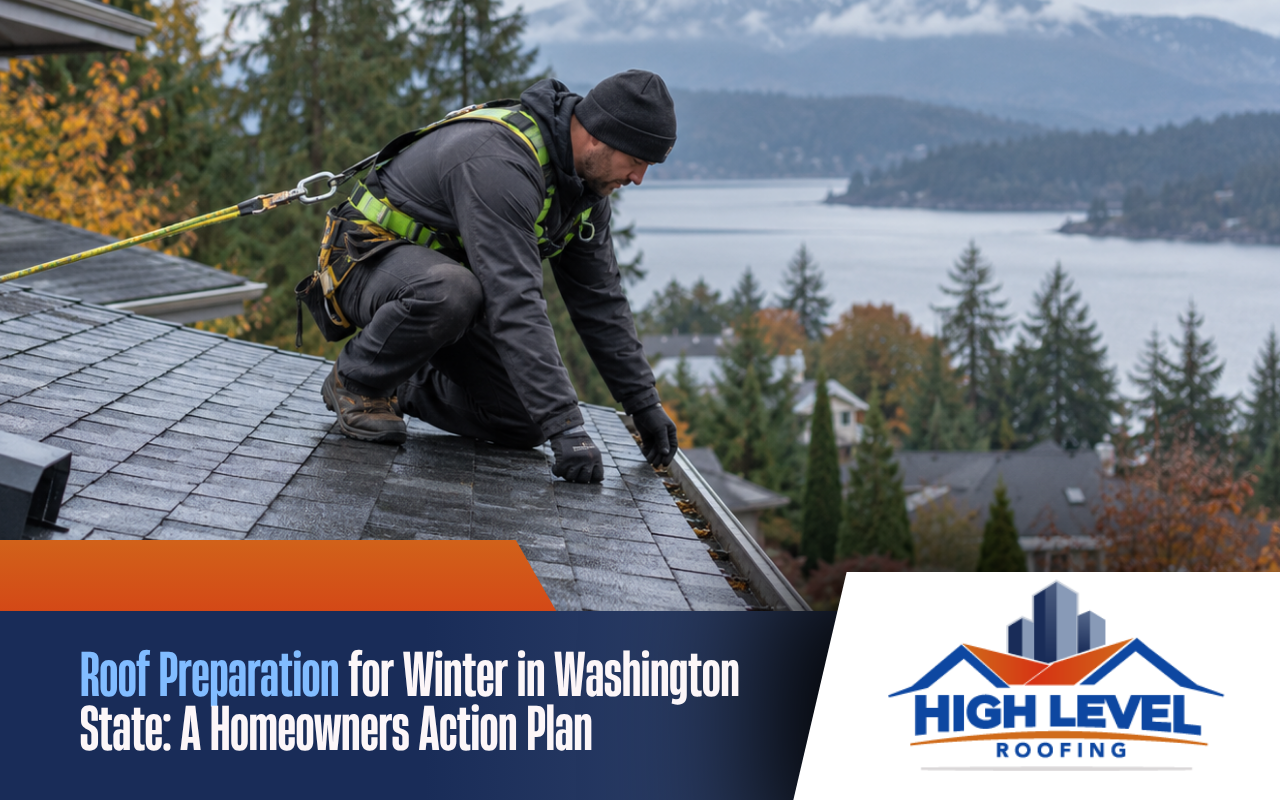
Winter roof problems often start before winter. A loose shingle in September, a clogged valley in October, or a small flashing gap in November can turn into an active leak after weeks of rain and wind. Good roof preparation for winter in Washington state focuses on finding those weak points while there is still time to correct them.
Homeowners planning seasonal service can review our roofing maintenance services in King County for an example of the preventive work that can support a stronger winter roofing plan.
Start With the Roof Areas Most Exposed to Water
Washington winters are not the same everywhere, but Western Washington homes commonly deal with repeated rain, wet debris, wind, cold nights, and occasional snow or ice. Start with the areas where water changes direction or where roofing materials meet another surface.
- Roof valleys
- Chimney and wall flashing
- Skylights and plumbing vents
- Eaves and gutter lines
- Low-slope roof sections
- Areas beneath overhanging branches
Five Signs Your Roof Needs Repair Before Winter
1. Missing or Lifted Shingles
Wind can loosen shingle edges and expose the layers below.
2. Ceiling or Attic Stains
A small stain may represent moisture traveling along framing before becoming visible indoors. Check the attic after rain when it is safe to do so.
3. Loose Flashing
Gaps around chimneys, vents, or wall connections can allow wind-driven rain to enter. Repeated caulk patches may signal that the flashing detail needs a proper repair.
4. Slow Roof Drainage
Leaves and needles can block gutters, valleys, drains, and downspouts. Standing water or repeated overflow puts extra moisture around roof edges and exterior materials.
5. Soft or Sagging Areas
A visible dip or soft roof deck may indicate more serious deterioration. Avoid walking on the area and arrange an evaluation promptly.
Winter Roof Maintenance Priorities
| Priority | Why It Matters | Best Timing |
|---|---|---|
| Roof inspection | Finds visible damage before prolonged wet weather | Early to mid-fall |
| Gutter and valley cleaning | Supports clear rainwater drainage | After major leaf drop and as needed |
| Flashing repair | Protects roof penetrations and transitions | Before recurring heavy rain |
| Attic moisture check | Helps identify leaks, condensation, or ventilation problems | Before and during winter |
| Storm follow-up | Finds wind or impact damage quickly | After severe weather |
Do Not Forget the Attic
Winter roof performance also depends on what happens below the roofing. Moist indoor air can enter the attic and condense on cold surfaces. Blocked ventilation, wet insulation, bathroom exhaust that terminates in the attic, or roof leaks can all create moisture concerns.
A roofer may recommend additional evaluation if the attic shows persistent frost, staining, damp insulation, or heavy condensation.
Expert Tip: Do not assume every attic stain is an active roof leak. Note when the stain appears, whether it changes after rain, and whether nearby ventilation or exhaust systems could be contributing moisture.
What If You Find Damage Right Before Winter?
Some roof problems can be repaired without replacing the whole roof. Isolated shingle damage, failed flashing, or a leaking penetration may have a targeted solution. If wear is widespread, the roof deck is deteriorated, or leaks keep returning, replacement may be more practical.
For Spanaway properties, our roof repair services in Spanaway provide a starting point for evaluating damage before winter.
You can also compare seasonal tasks with our summer roof maintenance checklist to build a year-round care routine.
Permits, Codes, and Winter Repair Planning
Washington roofing projects must follow applicable building standards, and permits are handled by the jurisdiction responsible for the property. Requirements can differ between cities and counties and may depend on whether the project is a minor repair, full reroof, structural repair, or change in roofing system.
When repairs involve significant decking or structural work, confirm permit and inspection needs before construction begins.
Insurance Considerations After Winter Storm Damage
If wind, a falling branch, or another sudden event damages the roof, photograph visible conditions from a safe location and keep receipts for necessary temporary protection. Contact your insurer to understand coverage and claim requirements.
Prepare Your Roof With an Experienced Local Team
At High Level Roofing LLC, we have more than 25 years of roofing experience. We are licensed, GAF-certified, and work with quality roofing products, including Malarkey Roofing Products. Our team serves homeowners and businesses throughout Washington.
We are available Monday through Saturday from 8:00 a.m. to 4:30 p.m. Customers within 50 miles of Tacoma receive free estimates. A fee applies for estimates beyond the 50-mile radius.
Schedule your winter roof preparation visit and address weak areas before the next stretch of cold, wet weather.
Winter Roof Preparation FAQs
When should I prepare my roof for winter in Washington?
Start in early fall whenever possible. That gives you time to inspect drainage, flashing, shingles, and attic conditions before long periods of winter rain.
Should I clean gutters before winter?
Yes. Clear gutters and downspouts help roof runoff move away efficiently. If trees continue dropping debris, another cleaning may be needed later in the season.
Can a small roof leak wait until spring?
Waiting can allow moisture to spread into insulation, decking, or interior finishes. Have the leak evaluated promptly so you understand the source and repair options.
Does roof preparation include attic ventilation?
A roofing inspection can identify visible ventilation or condensation concerns. Some homes may also need insulation, air-sealing, or mechanical ventilation evaluation.
Do winter roof repairs require permits?
Permit needs depend on the location and scope of work. Minor repairs and major reroofing projects can be treated differently, so confirm requirements with the local jurisdiction.