
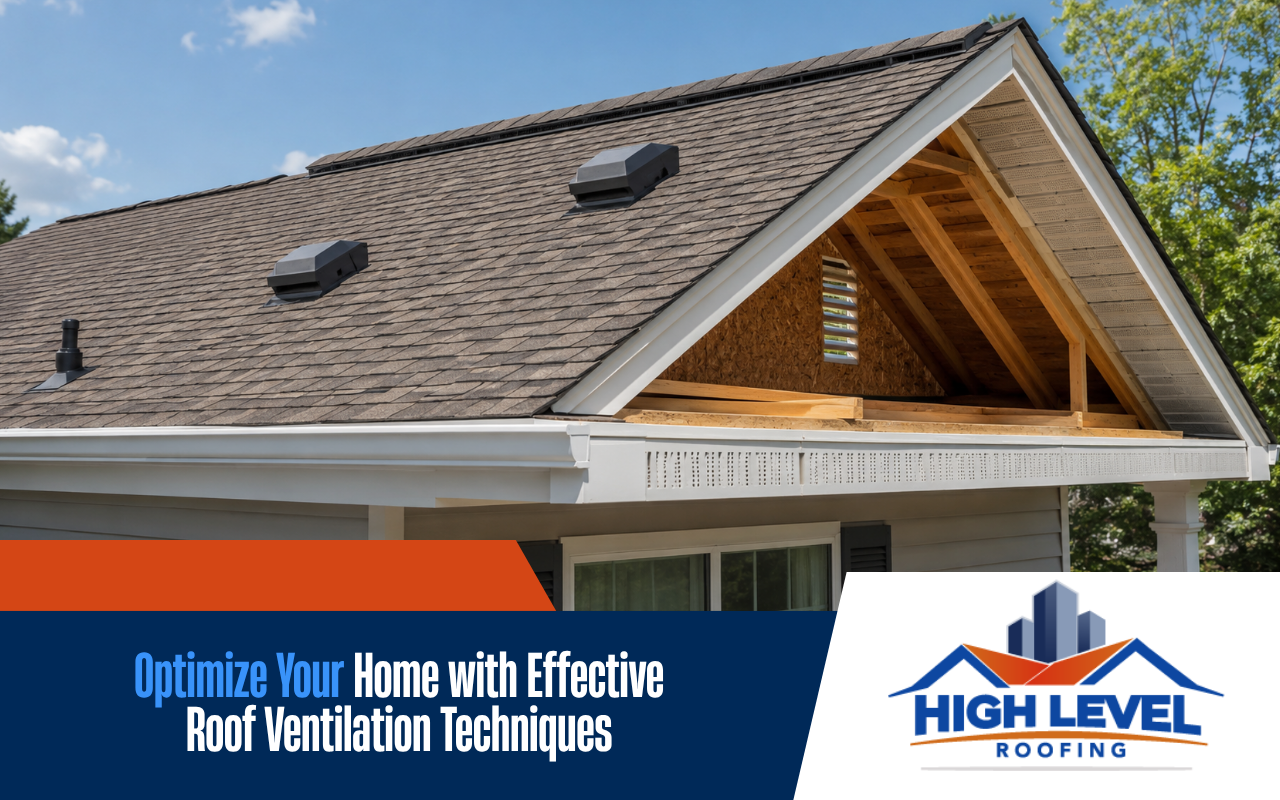
At High Level Roofing LLC, we help homeowners understand how airflow above the ceiling can affect comfort, moisture, and roof life. Good roof ventilation matters for every homeowner because trapped attic air can create problems you may not notice right away.
If your home feels stuffy, your attic gets too hot, or moisture appears near ceilings and walls, the attic may need better airflow. The right system can support attic heat control, reduce damp air, and help your roof work better through changing seasons.
Why Proper Airflow Matters Above Your Living Space
Heat and moisture can collect in the attic when air cannot move out. During warm months, trapped heat can make rooms below feel hotter. During cool or wet weather, moisture can settle on wood, insulation, and roof decking.
Balanced roof ventilation allows fresh air to enter and warm, stale air to leave. This steady movement helps protect your home from excess heat, damp conditions, and avoidable wear on roofing materials.
How Does Roof Ventilation Protect Your Home?
A healthy system works with intake and exhaust vents. Intake vents bring cooler outside air into the attic, usually near the eaves. Exhaust vents release hot or moist air near the roof peak. Both parts must work together for steady airflow.
Without this balance, attic ventilation may not perform well. Too much exhaust without intake can pull conditioned air from the home. Too little exhaust can leave heat and moisture trapped above your living space.
Key Roof Ventilation Options for Better Airflow
Different homes need different roof ventilation options. Roof shape, attic size, insulation, and local weather can all affect the best choice. A simple inspection can show whether your home needs more intake, better exhaust, or a cleaner path for air movement.
- Ridge vents release warm air along the roof peak and work well with soffit intake vents.
- Soffit vents bring fresh air into the attic from under the eaves.
- Gable vents can add airflow through the side walls of the attic.
- Turbine vents use wind movement to help pull stale attic air outside.
- Powered or solar vents may help when passive airflow is not enough.
For more detail, explore these roof ventilation options in Kitsap County and compare what may fit your home.
Attic Ventilation and Heat Control Basics
Attic ventilation is not only about comfort. It also helps limit heat buildup under the roof deck. When attic heat control is poor, shingles and roof materials may face extra stress during hot weather.
With High Level Roofing LLC, you can review your attic airflow and look for signs that heat is staying trapped. A balanced setup can help rooms feel more stable and support better roof performance over time.
Warning Signs Your Attic Needs Better Airflow
Some airflow problems are easy to miss because they happen above the ceiling. Paying attention to small changes can help you act before moisture or heat causes more serious damage.
- Rooms feel warmer than expected, even when the cooling system is running.
- The attic feels extremely hot or damp when inspected.
- Insulation looks wet, flat, or stained.
- Wood in the attic shows dark spots or signs of moisture.
- Roof shingles age unevenly or appear stressed in certain areas.
If roof damage appears along with airflow problems, our roof repair in Gig Harbor information can help you understand the next step.
Mistakes That Limit Long-Term Ventilation Performance
Even good vents can fail when they are placed poorly or blocked. Many attic airflow issues come from small mistakes that reduce movement between intake and exhaust points.
- Installing exhaust vents without enough intake near the eaves.
- Covering soffit vents with insulation, storage, or debris.
- Mixing vent types in a way that interrupts natural airflow.
- Ignoring attic moisture after roof repairs or insulation work.
- Choosing vents without checking attic size and roof design.
Our team at High Level Roofing LLC can check for these issues and explain practical changes. This helps you avoid guesswork and focus on improvements that match your home.
Frequently Asked Questions
What is the main purpose of roof ventilation?
The main purpose is to move hot and moist air out of the attic while bringing fresh air in. This helps protect roof materials, improve comfort, and reduce moisture problems.
How do I know which vent option my home needs?
The right choice depends on attic size, roof shape, existing vents, and local moisture levels. You can compare common roof ventilation options to better understand what may fit your home.
Can poor attic ventilation affect my energy use?
Yes. When attic heat stays trapped, rooms below can feel warmer. Better airflow can support attic heat control and may reduce strain on your cooling system.
Do homes in Kitsap County need special ventilation care?
Homes in damp or changing weather need careful airflow planning. For roof ventilation in Kitsap County, it helps to review local moisture concerns and read more about why ventilation matters for local homeowners.
When should I call a roofing professional?
Call a professional if you notice attic moisture, heat problems, blocked vents, or roof wear. When you choose High Level Roofing LLC, we can inspect the roof area and guide you through roof repair concerns in Gig Harbor when needed.
Plan Better Ventilation with Local Roofing Guidance
Better airflow starts with understanding your attic, roof design, and local conditions. Roofing specialists in Gig Harbor can look at intake, exhaust, insulation, and moisture signs to find the right path forward.
Our team at High Level Roofing LLC can help you plan a smarter ventilation approach for comfort, roof care, and long-term home protection. To discuss your attic airflow concerns, contact our roofing team and share what you are noticing in your home.