
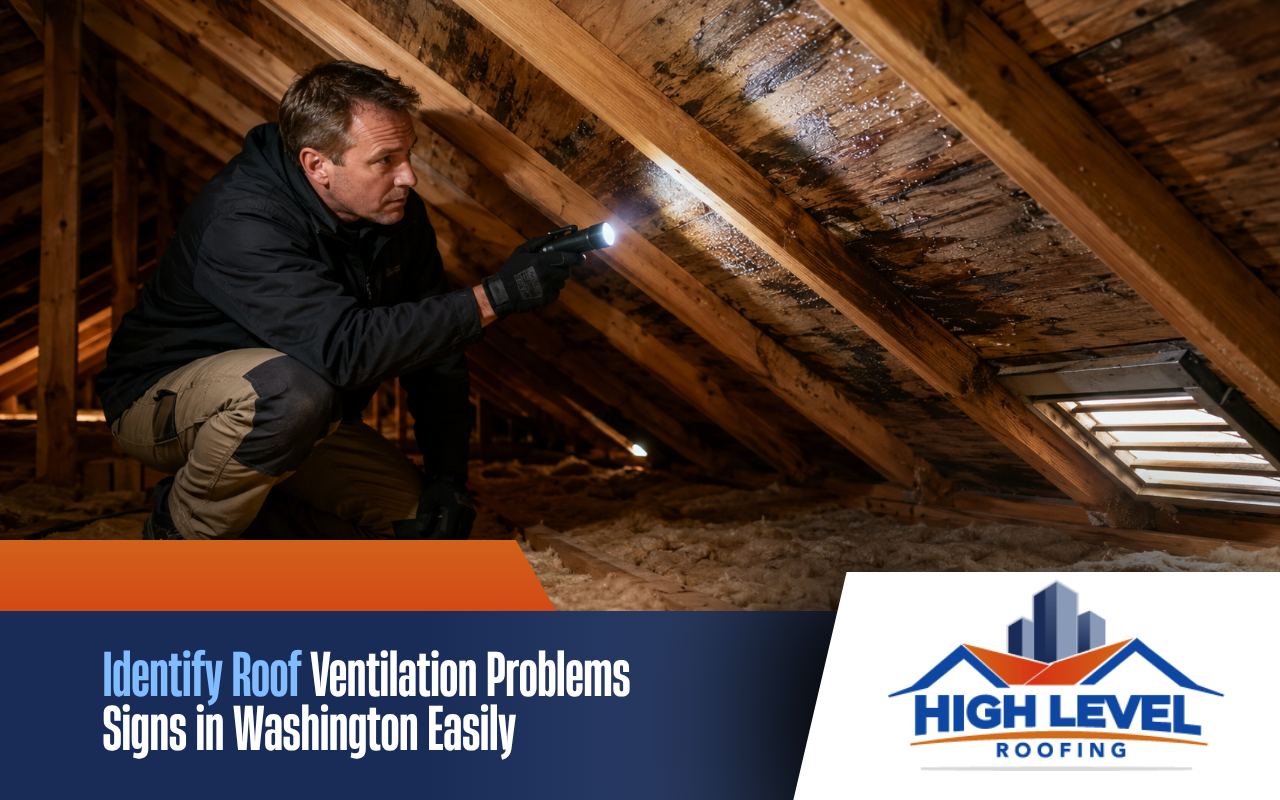
Washington’s damp winters and warmer summer days can place heavy pressure on your attic. At High Level Roofing LLC, we know that blocked or unbalanced airflow may allow heat and moisture to collect above your living space.
Learning the main roof ventilation problems signs in Washington can help you act before damage spreads. Our guide to professional roof ventilation services explains how balanced airflow supports a safer and more comfortable home.
Why Washington Attics Struggle With Airflow
Washington homes face changing conditions throughout the year. Rain, indoor humidity, cold nights, and summer heat can all affect the attic. Without steady airflow, moisture may remain on roof sheathing, insulation, and wood framing. Over time, these materials can weaken or develop stains, odors, and decay.
The poor roof ventilation effects may not appear at once. Small airflow problems can slowly raise attic temperatures or trap damp air. This process may shorten the useful life of roofing materials and make indoor rooms harder to heat or cool.
Warning Signs Inside and Outside Your Home
Many roof ventilation problems signs in Washington can be noticed without special tools. Changes in temperature, moisture, or energy use may point to restricted attic airflow. These warning signs should be checked before they lead to larger roofing or indoor comfort problems.
- Condensation on nails, rafters, or roof sheathing
- Musty odors in the attic or upper rooms
- Wet, compressed, or sagging insulation
- Water stains on ceilings or interior walls
- Unusually hot rooms on the top floor
- Ice buildup along roof edges during winter
- Higher heating or cooling use without a clear reason
These signs of bad attic ventilation can also resemble roof leaks or insulation problems. A careful inspection helps separate the causes. For more local guidance, review why roof ventilation matters for Kitsap County homes.
Could Your Attic Be Trapping Too Much Heat?
August heat waves in the Pacific Northwest can make an attic much hotter than the outdoor air. Trapped heat may move into bedrooms and hallways below. Your cooling system then works longer, while roofing materials remain exposed to high temperatures for many hours.
Our team at High Level Roofing LLC can evaluate whether intake and exhaust vents are working together. A balanced system allows cooler air to enter near the eaves while warmer air leaves through higher vents. This movement can reduce heat buildup before autumn rain and colder nights arrive.
Moisture Damage Often Starts Above Ceilings
Warm indoor air naturally rises. When it reaches a cold attic surface, it may form condensation. If that moisture cannot escape, it can drip onto insulation or wood. Brown ceiling marks, damp attic corners, and dark spots near roof decking may appear as the problem grows.
Mold may also develop in areas with poor airflow and steady moisture. Ventilation alone may not solve every moisture problem, but it is an important part of attic protection. Proper insulation, air sealing, and clear vents should work together to control damp conditions.
Roof Ventilation Requirements for Balanced Airflow
Roof ventilation requirements depend on the attic design, roof shape, insulation, and local building rules. Most systems need a balance between lower intake vents and higher exhaust vents. Adding more exhaust without enough intake may fail to improve airflow.
- Check that soffit or eave vents allow outside air to enter.
- Confirm that insulation does not block the intake openings.
- Inspect ridge, roof, or gable vents for debris and damage.
- Make sure bathroom and kitchen ducts do not release air into the attic.
- Compare the vent layout with the size and design of the attic.
With High Level Roofing LLC, you receive guidance based on the home’s actual roof system. You can also explore why ventilation matters during roofing installation before planning future roof work.
When Roof Ventilation Repair Becomes Necessary
Basic cleaning may help when leaves, insulation, or dust block an opening. However, roof ventilation repair may be needed when vents are damaged, placed incorrectly, or unable to support balanced airflow. A professional inspection can identify whether the concern comes from ventilation, insulation, leaks, or several issues together.
- Replace cracked or damaged roof vents.
- Open soffit vents blocked by insulation.
- Add intake ventilation where airflow is limited.
- Correct exhaust vents that are poorly placed.
- Redirect indoor exhaust ducts away from the attic.
Fans are not always the best first solution. In some homes, powered fans can pull conditioned air from living areas if air sealing is poor. The full attic system should be reviewed before new equipment is added.
Frequently Asked Questions
What are the most common signs of bad attic ventilation?
Common signs include musty odors, damp insulation, hot upper rooms, ceiling stains, and condensation on attic surfaces. Our overview of roof ventilation in Spanaway explains how local homes may be affected by seasonal heat and moisture.
Can poor ventilation cause ice dams?
Yes. Warm attic air can heat the upper roof and melt snow. The water may freeze again near colder eaves, creating an ice ridge. Balanced airflow and proper insulation help keep the roof surface closer to the outdoor temperature.
Does attic ventilation help during summer heat?
Ventilation can help remove some trapped attic heat, especially when intake and exhaust openings are balanced. It may also reduce pressure on indoor cooling systems. Learn more through our roof ventilation information.
How do I know whether I need roof ventilation repair?
A repair may be needed when vents are broken, blocked, missing, or installed in an unbalanced layout. When you choose High Level Roofing LLC, we examine the attic and roof system before recommending changes.
Should ventilation be checked before autumn?
Late summer is a practical time to inspect attic airflow. Heat may expose comfort problems, while an early check can prepare the roof for autumn rain. You can request a roof ventilation evaluation before seasonal conditions change.
Prepare Your Washington Roof Before Autumn Arrives
Recognizing roof ventilation problems signs in Washington can help you respond before trapped heat or moisture causes wider damage. A clear vent path, balanced airflow, proper insulation, and sealed indoor air leaks all support a healthier attic through changing seasons.
At High Level Roofing LLC, we can review visible warning signs and explain suitable next steps for your roof. Use our contact page to discuss attic ventilation concerns or request a ventilation service quote before autumn weather reaches Washington.